
Nitric Acid Passivation System
Remove free iron and restore corrosion resistance with Zenith Ultrasonics precision-engineered nitric acid passivation systems.
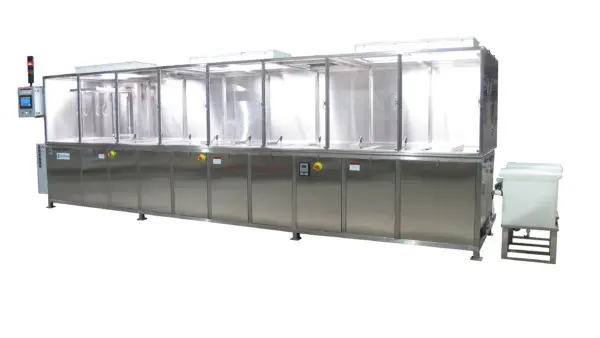
Manufacturers producing stainless steel components for demanding applications face the persistent challenge of free iron contamination from machining, forming, welding and handling processes which can compromise the natural corrosion resistance of stainless steel. A properly engineered nitric acid passivation system removes that contamination and restores the protective chromium oxide layer that defines stainless steel performance. Zenith Ultrasonics designs and builds complete nitric acid passivation systems for production environments where process control, documentation and integration with existing manufacturing lines are essential requirements.

Made in the USA

Custom Engineered Solution

Comprehensive Warranty
Get In Touch
What is Nitric Acid Passivation?
During manufacturing operations like machining, grinding, stamping or welding, iron particles from tooling can embed in the stainless-steel surface or transfer from handling equipment. These iron contaminants sit outside the protective chromium oxide layer and corrode rapidly, producing visible rust staining and compromising component performance. The passivation process is a controlled chemical treatment that removes free iron contamination from stainless steel surfaces and enhances the formation of the chromium-rich oxide layer responsible for stainless steel’s corrosion resistance.
Process Stages in Zenith’s Nitric Acid Passivation Systems
As Zenith Ultrasonics provides complete nitric acid passivation systems rather than standalone chemical services, the process is engineered as an integrated, reproducible manufacturing operation. Each stage is designed to function as part of a controlled system that delivers consistent surface quality, reliable documentation and smooth integration into existing production lines.
Below is an overview of the typical process steps as executed within a dedicated passivation system.
Pre-Cleaning: Before parts enter the nitric acid stage, they must be free of machining oils, coolants, drawing compounds, fingerprints and other surface residues. These contaminants interfere with acid contact and reduce passivation effectiveness. Within a passivation system, pre-cleaning is typically performed using aqueous alkaline detergent solutions. Ultrasonic energy is applied to improve cleaning efficiency, especially for complex geometries, blind holes, internal passages, and threaded features.
Nitric Acid Immersion: After cleaning and rinsing, parts are transferred into a nitric acid passivation tank where concentration, temperature, and exposure time are tightly controlled by the system. Immersion times generally fall between 20 and 30 minutes, depending on stainless steel grade, applicable specifications, and the level of free iron contamination. During this stage, free iron and iron compounds dissolve into the nitric acid passivation solution while the chromium-rich stainless-steel surface remains unaffected.
Rinse and Neutralization: Following acid immersion, the passivation system guides parts through multiple rinse stages to remove residual acid and dissolved contaminants. Rinse water quality is carefully managed, as it directly affects final surface condition and corrosion performance. Controlled rinsing within the system prevents staining, residue formation and recontamination.
Drying and Re-Passivation: Once rinsing is complete, the system dries parts using heated air based on part geometry and production throughput requirements. After drying, the chromium-enriched surface naturally reacts with atmospheric oxygen to form a dense passive oxide layer. This re-passivation begins immediately and continues to strengthen over the next 24 to 48 hours, completing the corrosion-resistant surface restoration.
Nitric Acid Passivation Systems: Key Features
At Zenith Ultrasonics, we design and build complete passivation systems that combine precise process control, corrosion-resistant construction and practical automation into a single production-ready solution. Here are some key features of our nitric acid passivation systems.
- Multi Stage Process Design: We configure our systems as sequential process lines that typically include alkaline cleaning, rinsing, nitric acid passivation, final rinses and drying. Each stage operates at defined temperatures, chemical concentrations and cycle times to ensure consistent surface results.
- Ultrasonic Pre-cleaning: We integrate ultrasonic transducers into the pre-cleaning stage to remove oils, metal fines and residues from complex geometries, blind holes and threaded features. This ensures uniform surface preparation before passivation.
- Material Handling Configurations: We offer material handling options, including manual loading, hoist-based transfer and automated gantries. Each approach is selected based on part size, throughput needs and available floor space.
- Corrosion-Resistant Construction: Our systems feature all stainless steel construction with internally mounted components for protection and easy service access. Acid-specific plumbing designs are used to improve long-term reliability.
- Automation and Controls: The system incorporates the TRANSTAR II automation platform which shields control components from acidic environments. PLC-based controls with a color touchscreen HMI support multiple process recipes and remote access, all housed within NEMA 4X enclosures for added protection.
- Pumps, Filtration and Fluid Management: The system is equipped with acid-compatible, seal-less circulation pumps to ensure reliable fluid movement. Stainless steel filter housings and dedicated filter pumps on ultrasonic cleaning and rinse tanks help keep process solutions clean and consistent.
- Safety and Thermal Management: The nitric acid passivation solution can be supported by optional automated tank covers that reduce fume emissions and closed-cell, fluoride and chloride-free insulation that limits heat loss without introducing materials that could contribute to corrosion.
Industries That Use Nitric Acid Passivation Systems
Zenith Ultrasonics nitric acid passivation systems serve a wide range of manufacturing sectors where corrosion-resistant stainless steel surfaces are essential. We regularly design and manufacture precision-engineered systems for clients from these industries.
- Aerospace: Flight-critical components such as hydraulic fittings, fuel system parts, fasteners, actuator housings, and engine components undergo passivation to meet AMS 2700 specifications. Our systems provide controlled processing, traceable documentation, and repeatable results, protecting component longevity and ensuring reliability in service-critical aerospace applications.
- Automotive: Stainless steel fuel system components, exhaust parts, brake assemblies, sensor housings, and structural parts require resistance to road salt, moisture, and extreme temperature cycles. The passivation process extends part life, maintains performance under harsh conditions, and supports quality control in high-volume automotive production.
- Military and Defense: Weapons systems, vehicles, naval and aircraft components operate in extreme environments such as saltwater, deserts, and arctic conditions. The process delivers aggressive free iron removal and superior corrosion protection, ensuring mission-critical reliability.
- Industrial Stainless Assemblies: Valves, pumps, fittings, instrumentation housings, and equipment for food, pharmaceutical and chemical processing require clean, corrosion-resistant surfaces. Our passivation systems protect stainless steel surfaces, ensuring operational longevity and compliance with hygiene and safety standards.
- Medical Device Components: Surgical instruments, implantable devices and diagnostic housings require biocompatible, corrosion-resistant surfaces.
Safety Guidelines for Nitric Acid Passivation Systems
Proper handling of nitric acid is essential for safety and compliance in passivation processes. Below are key safety guidelines to follow:
- Personal Protective Equipment: Operators must wear appropriate protective gear, including goggles, acid-resistant gloves and clothing, with face shields for added protection during acid transfers.
- Ventilation Requirements: Ensure local exhaust systems or tank covers with ducted exhaust to effectively remove harmful fumes and maintain safe air quality.
- Emergency Equipment: Eyewash stations and safety showers should be located within 10 seconds of acid tanks, and spill containment materials and fire extinguishers must be readily accessible.
- Temperature Monitoring: Monitor solution temperatures and set alarms to notify operators if they approach unsafe levels, preventing overheating and fume generation.
- Training Requirements: All personnel should undergo annual training on chemical safety, safe handling, emergency procedures, and proper use of PPE.
- Waste Handling: Follow local environmental regulations for the disposal of spent acid and rinse water, ensuring waste is stored and handled properly to avoid chemical reactions.
Partner with Our Experts to Design Your Ideal Passivation System
If you’re considering a nitric acid passivation system for a new production line, upgrading outdated equipment, or adding passivation capabilities to your manufacturing process, Zenith’s applications engineers are here to help.
We need to understand your parts, contamination, production volume, quality specifications and facility layout. This information determines the system configuration that fits your application.